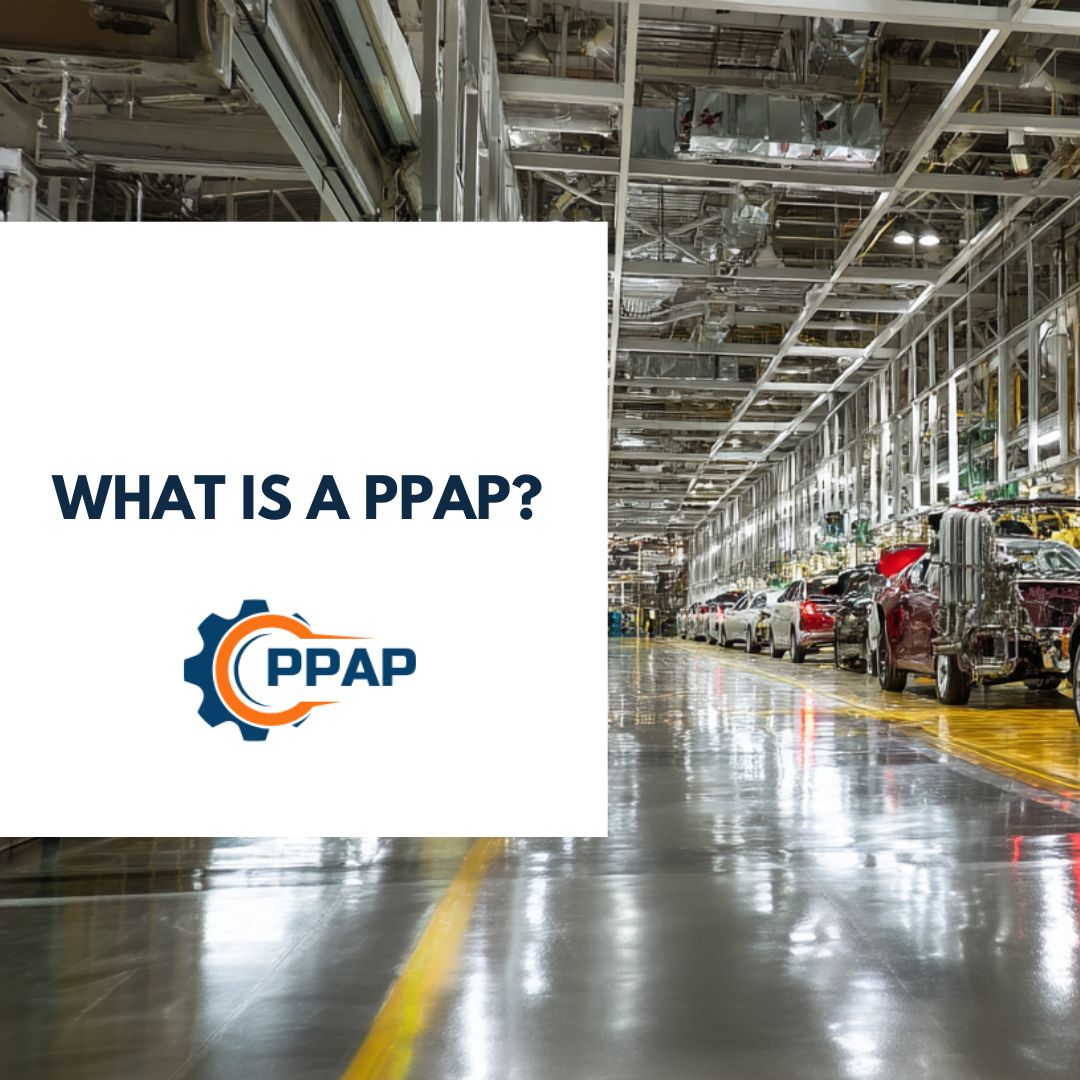
The Production Part Approval Process (PPAP) is a standardized method used within manufacturing supply chains—most notably in the automotive industry—to verify that a supplier can consistently produce parts that meet all customer engineering, quality, and specification requirements.
At its core, PPAP exists to reduce risk before full-scale production begins. It ensures that design intent is clearly understood, manufacturing processes are properly defined and controlled, and that the supplier is capable of producing conforming parts at the agreed production rate.
As defined by industry standards, PPAP demonstrates that:
“All customer engineering design record and specification requirements are properly understood by the supplier and that the process has the potential to produce product consistently meeting these requirements during an actual production run at the quoted production rate.”
The role of AIAG and APQP
The Automotive Industry Action Group (AIAG) is a leading automotive industry body responsible for developing and maintaining the PPAP standard as part of the broader Advanced Product Quality Planning (APQP) framework. APQP and PPAP work together to promote a common approach to product development, quality planning, and production approval across the automotive supply chain.
By establishing shared terminology, document structures, and submission requirements, AIAG helps improve communication between OEMs and suppliers while reducing ambiguity and variation in approval processes.
Customer-specific requirements
Although PPAP is standardized through AIAG, it is important to understand that each OEM or manufacturer may impose additional customer-specific requirements. These can include unique documentation formats, approval levels, submission thresholds, or validation expectations that go beyond the core PPAP elements.
For this reason, successful PPAP submission depends not only on following the AIAG standard, but also on carefully reviewing and complying with individual customer requirements. Failure to do so can result in delayed approvals, rejected submissions, or production hold-ups.
Why PPAP matters
When applied correctly, PPAP helps:
- Confirm manufacturing readiness before production launch
- Reduce defects, rework, and recalls
- Establish clear accountability between suppliers and customers
- Provide documented evidence of process capability and control
Ultimately, PPAP supports consistent quality, stronger supplier relationships, and smoother product launches across the manufacturing lifecycle.



Leave a Comment